


Detailansicht
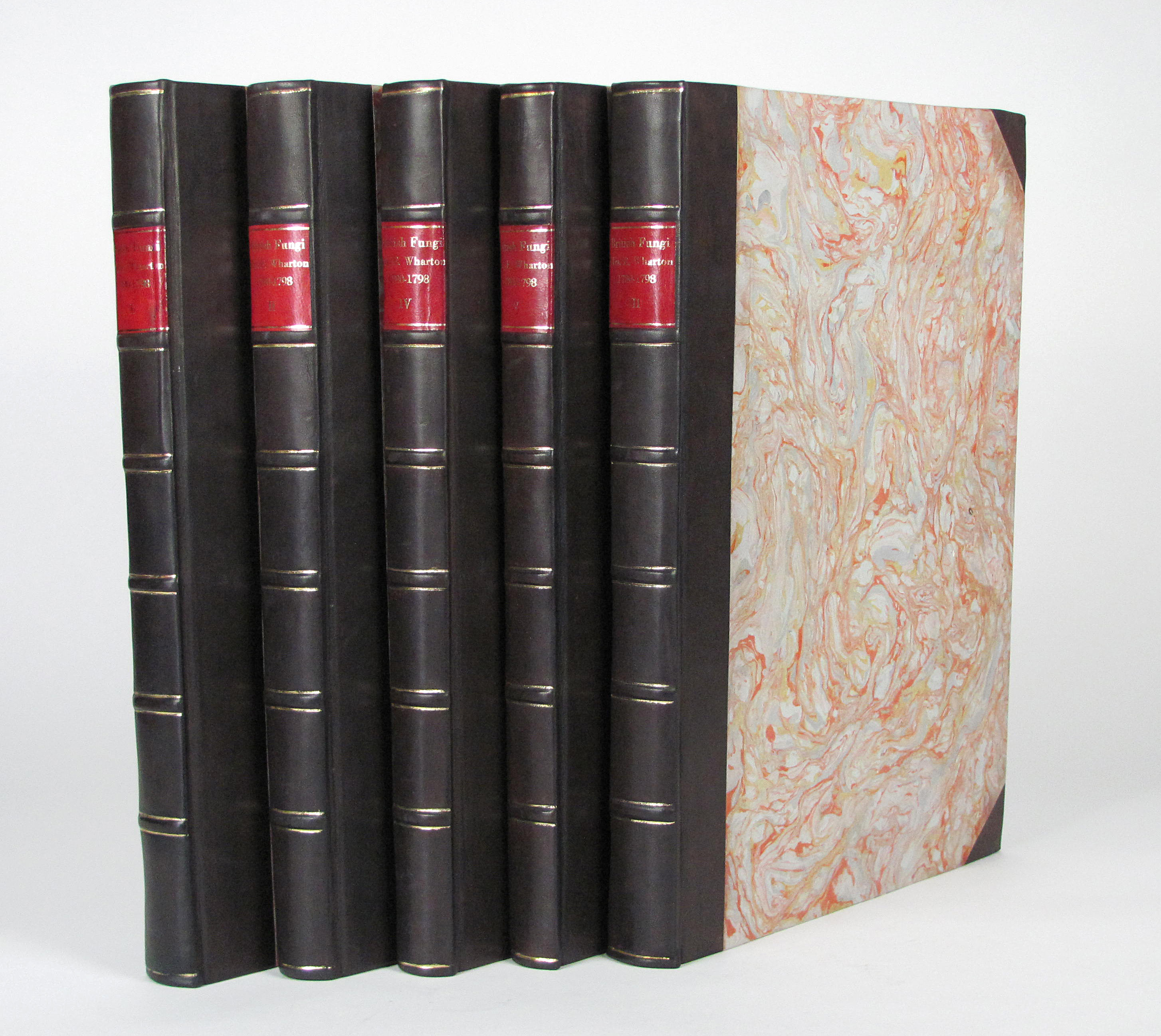
Wharton, British Fungi. Manuskript mit 288 Tafeln.




Wharton, Elizabeth,
British Fungi. Manuskript mit 288 Tafeln.
€ 19.000.–
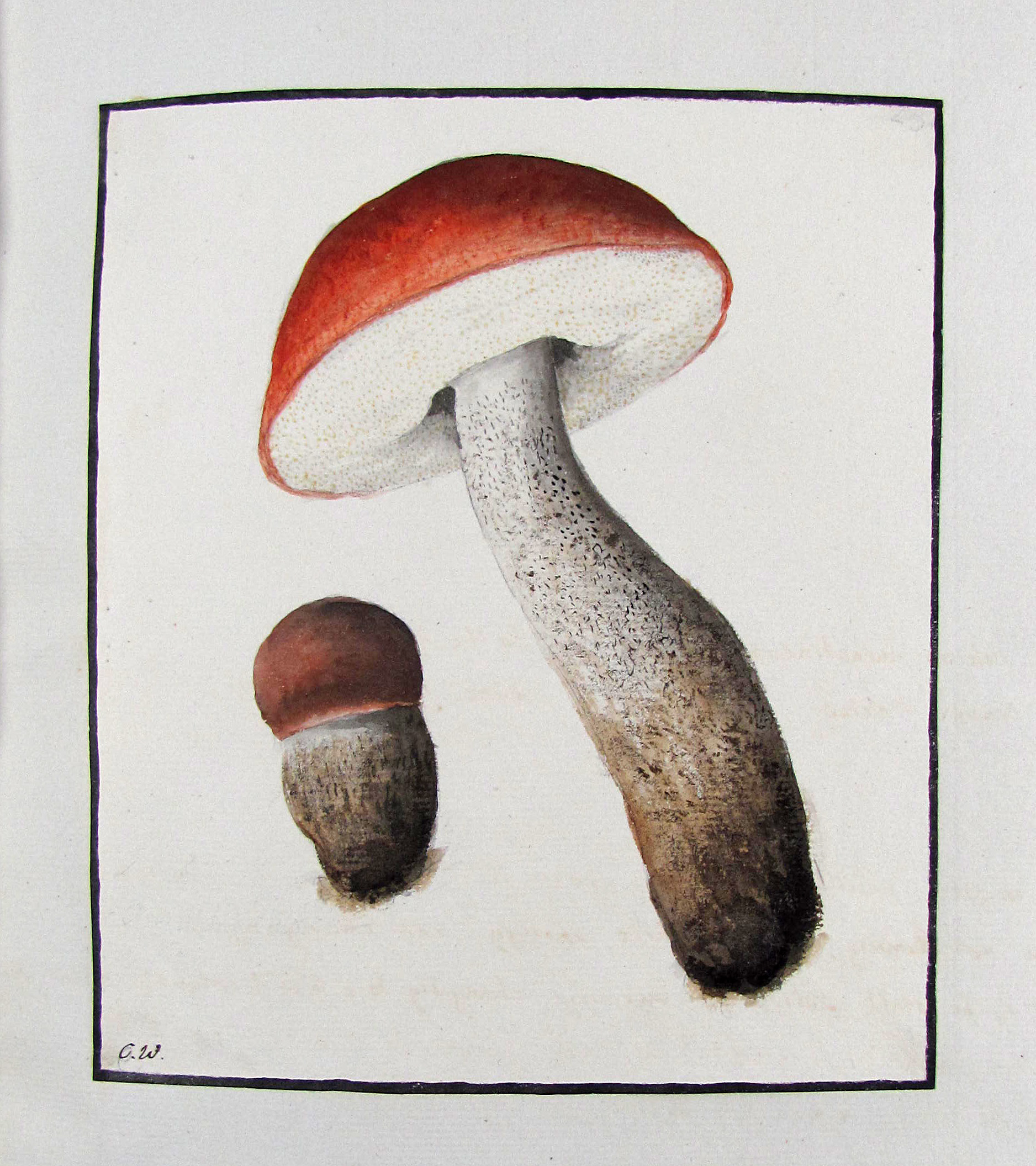
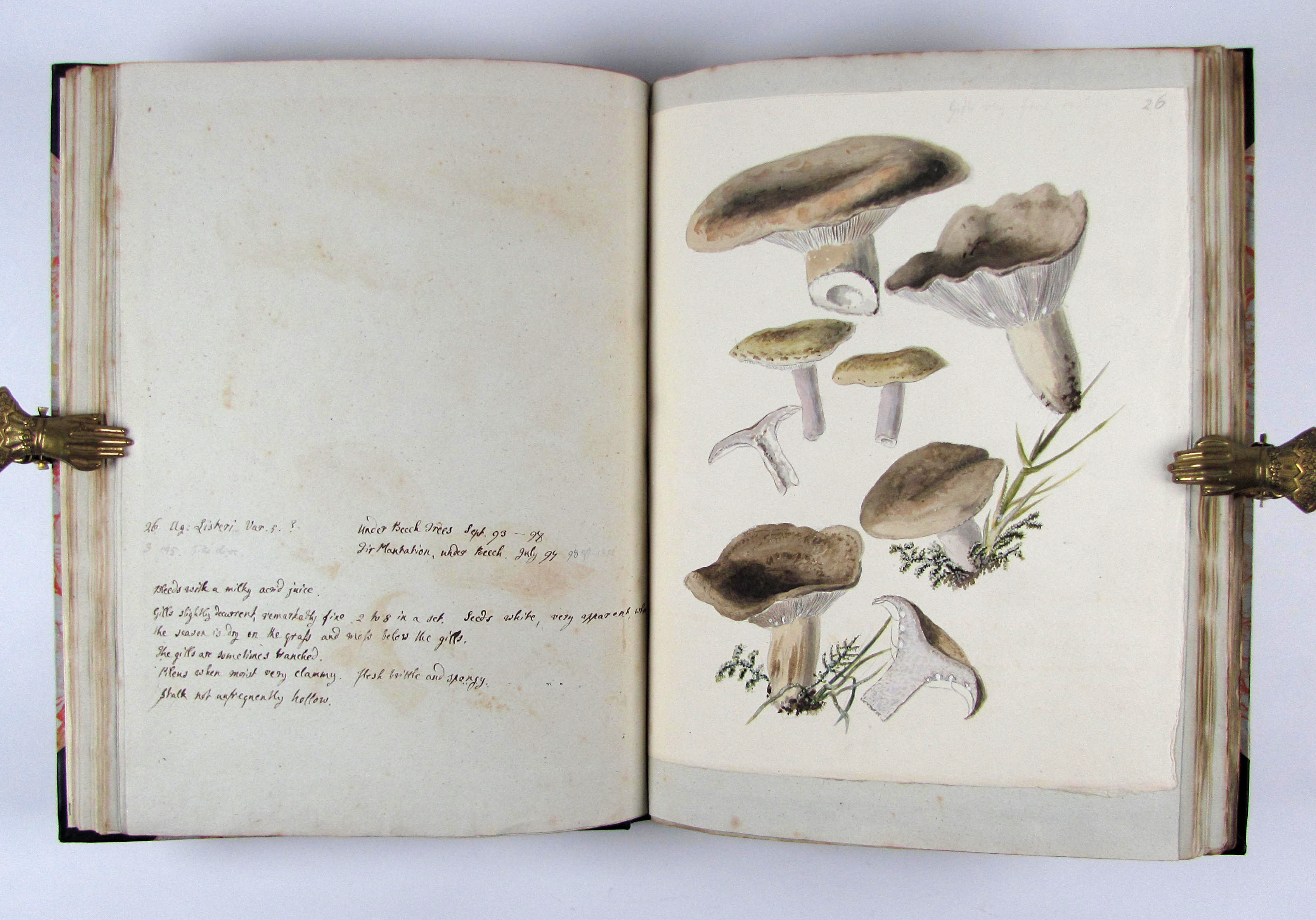
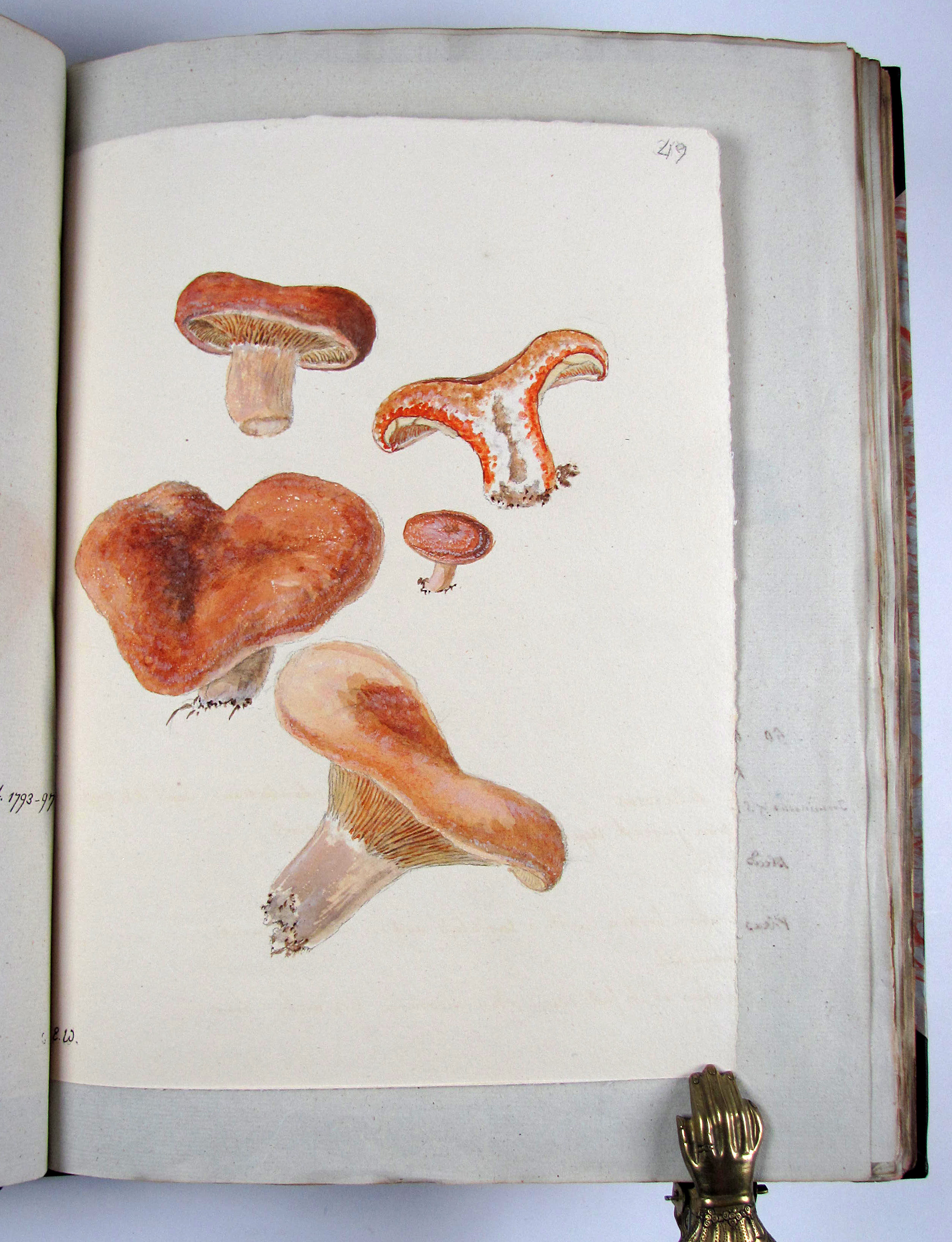
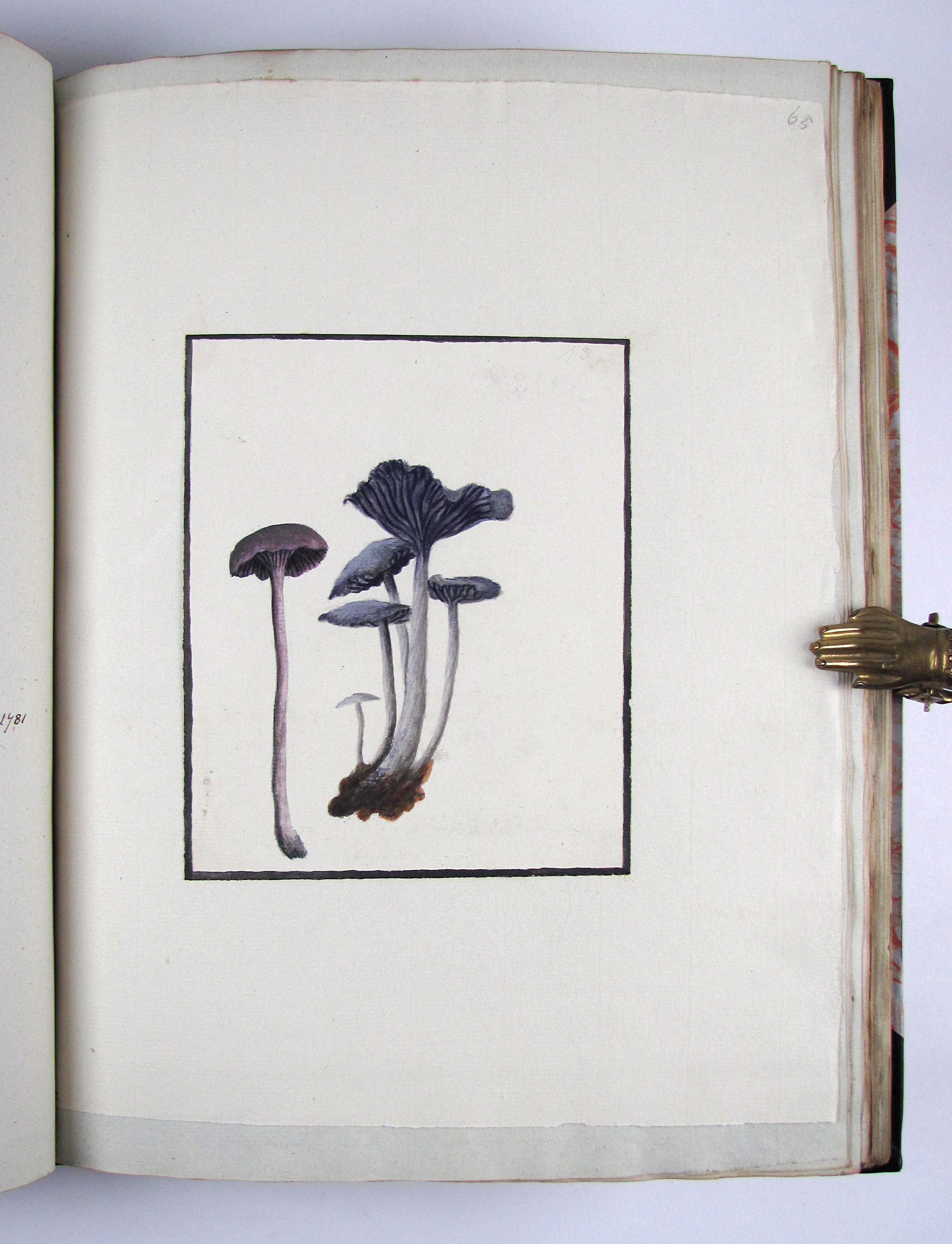
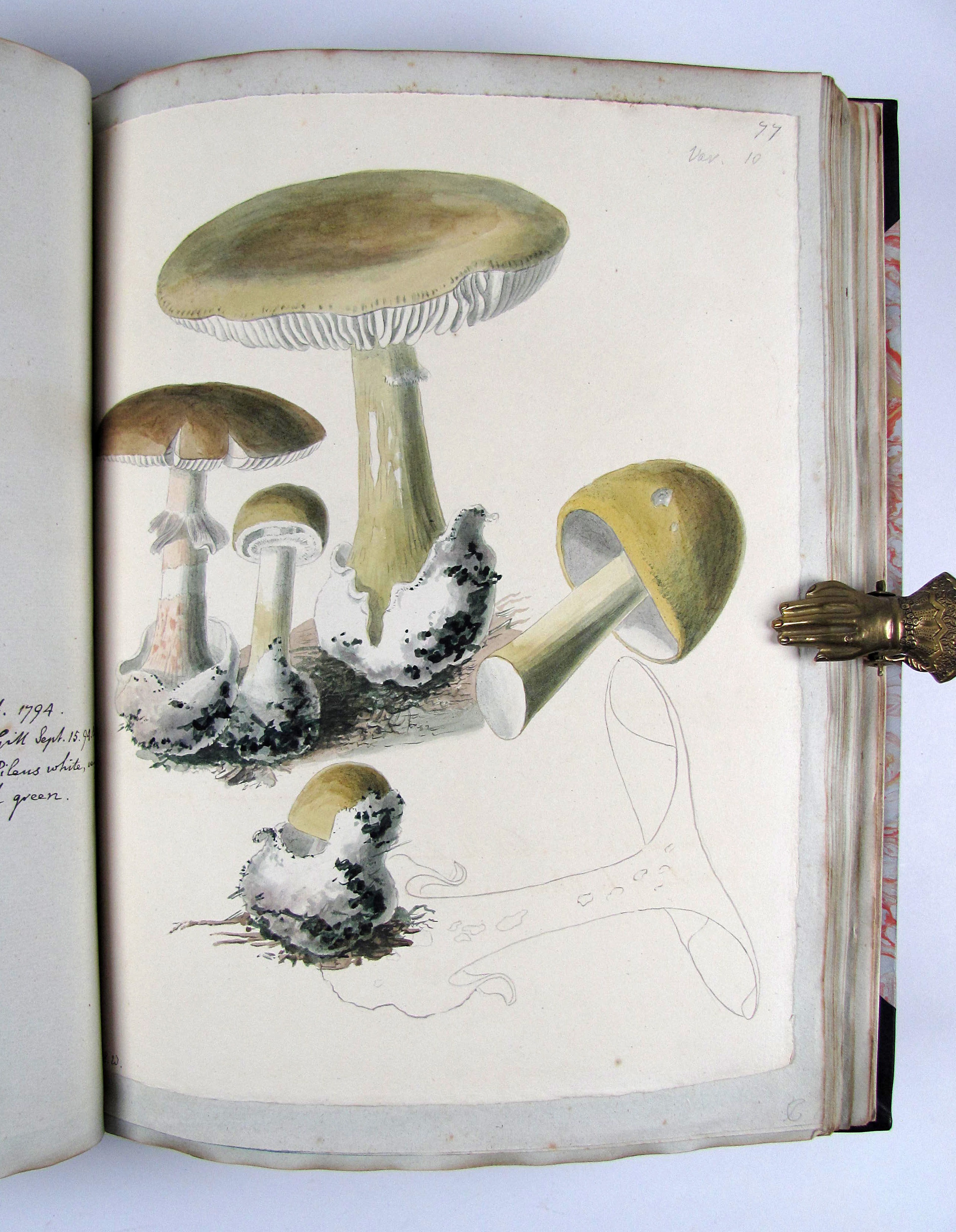
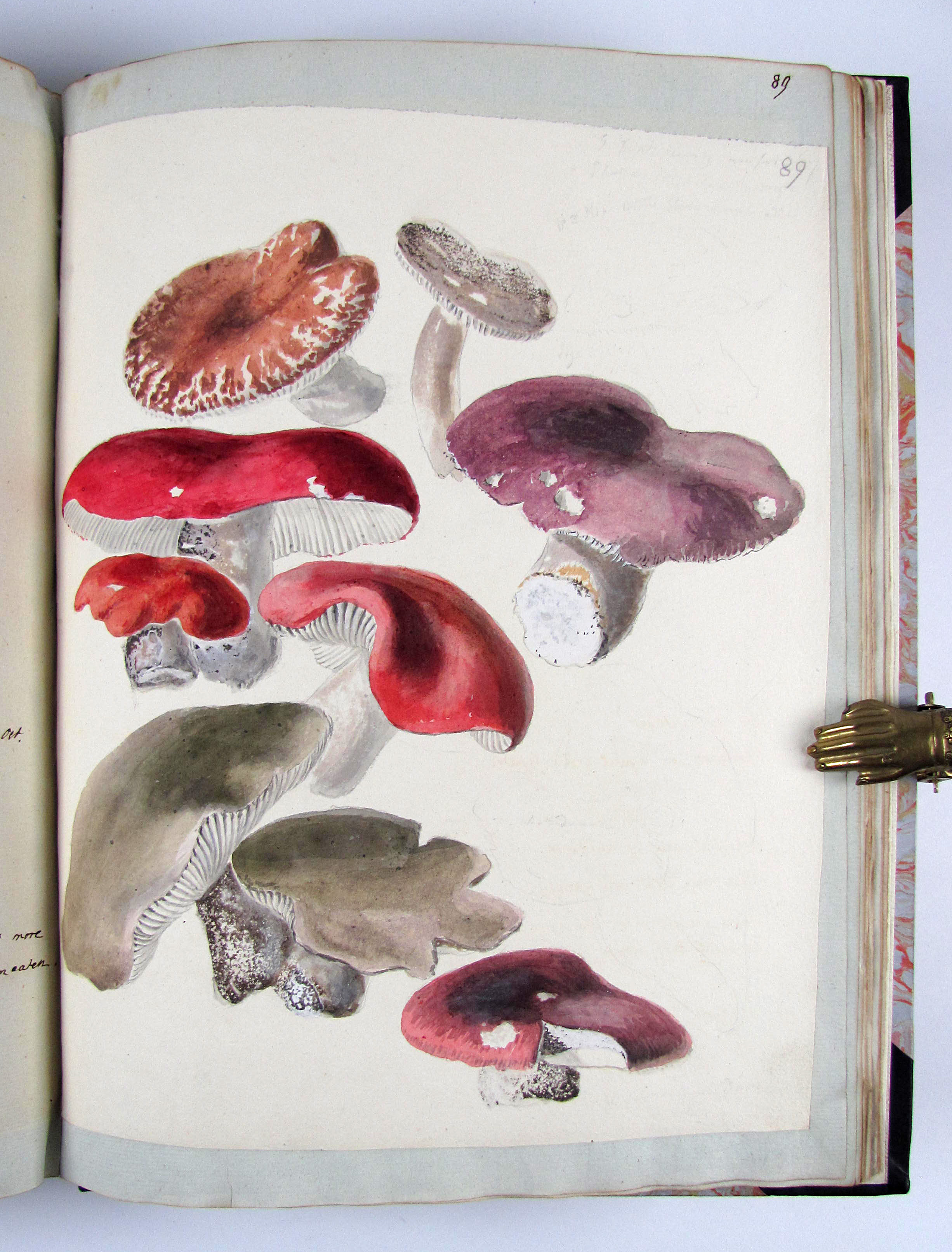
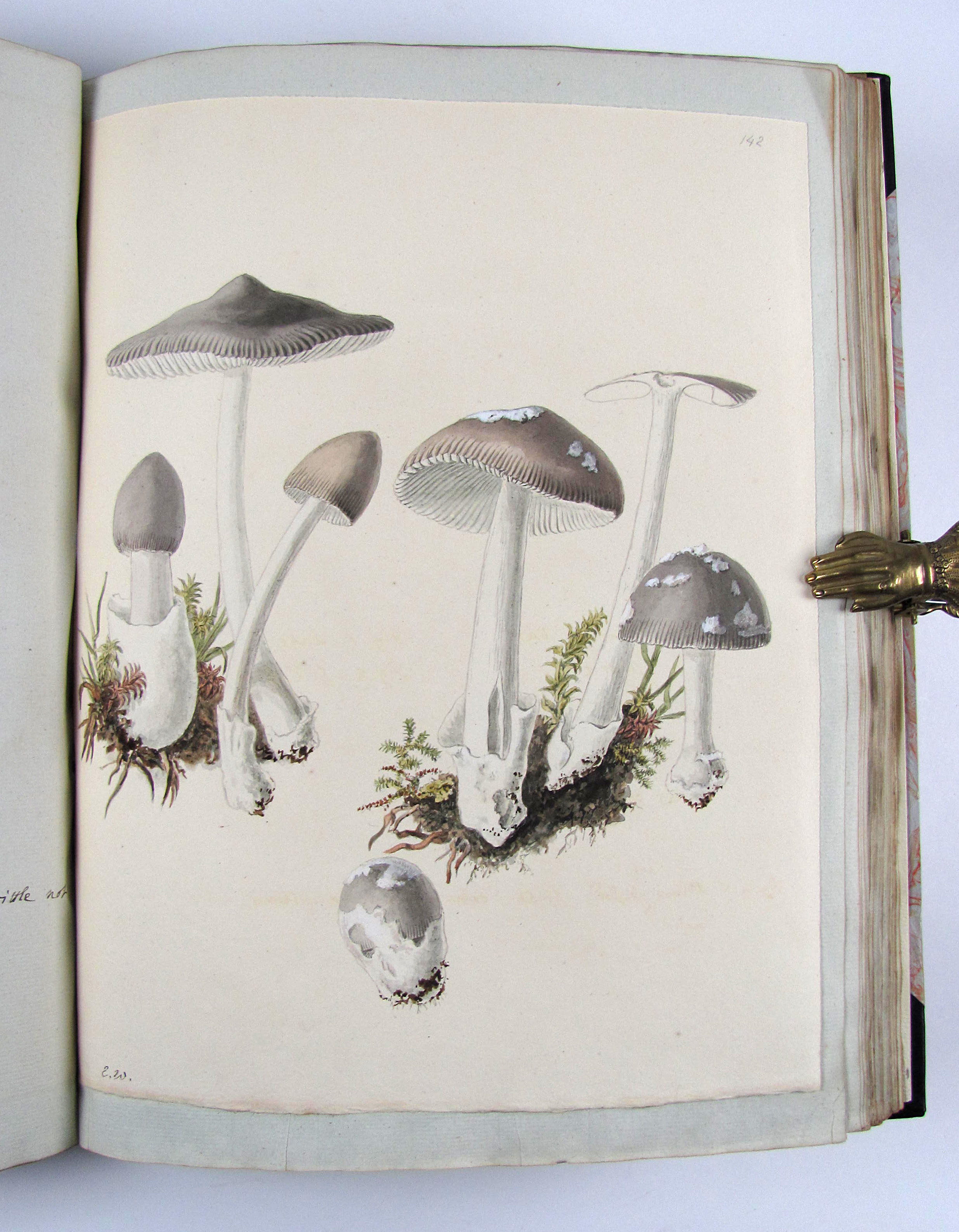
Prächtiges und umfangreiches Manuskript zu Pilzen. Über die Verfasserin ist nur wenig bekannt, die Oak Spring Garden Collection verfügt über 4 Bände mit botanischen Aquarellen (Blumen, Grässer und Algen) die zum größten Teil von Elizabeth, vereinzelt wohl auch in Zusammenarbeit mit ihrer Schwester Margaret geschaffen wurden. Die Qualität der detaillierten und durchgehend mit „E.W.“ monogrammierten Aquarelle ist hoch, oft werden mehrere Abbildungen eines Pilzes gezeigt, die verschiedene Altersstadien oder Ansichten darstellen und so die Identifikation erheblich erleichtern. Auf dem nebenstehenden Text findet sich oft die systematische Bezeichnung und Kurzbeschreibung des Pilzes, hin und wieder mit Bezug auf das Werk von James Bolton (An History of the Fungusses growing about Halifax, 1788-91) und das von James Sowerby (Coloured figures of English Fungi, ab 1797), des weiteren die Eigenschaften und Fundorte mit Datierung. Im Gegensatz zum sehr starken Vélinpapier der Tafeln wurde beim Text ein Büttenpapier verwendet. Die Blattgröße des Textes ist ca. 34 x 25 cm., die Tafeln ca. 30 x 22 cm. Die Fundorte verteilen sich in der Grafschaft Durham oft zwischen den Orten Bishop Auckland, Newton Aycliff und Spennymoor, teils auch westlich davon oder im weiteren Umkreis. Tafeln und Textblätter sind meist, aber nicht immer, nummeriert und dabei tragen eine Tafel und der dazugehörige Text dieselbe Nummer. Hin und wieder sind einer Spezies auch mehrere Blätter gewidmet, die dann ebenfalls alle die gleiche Nummer tragen. Am Ende von Band 3 findet sich ein Index zu den bisher vorliegenden Nummern, mit Bezug zum Werk von Sowerby und einem mir unbekannten Werk, „Wither“ (?, siehe auch die Bezeichnung bei Tafel 255). Die Nummerierung ist aus mir unbekannten Gründen lückenhaft und reicht bis zur Nummer 559. Am Ende ein späteres, nicht mitgezähltes Aquarell von 1855. – Manuskripte zu Pilzen vor 1800 von diesem Umfang und Qualität dürfen als sehr selten bezeichnet werden. Provenienz: Sotheby’s London, Mycological Book and Drawings, 02.06.1971, lot 178.– Von sehr guter Gesamterhaltung.
Oak Spring Garden Foundation am 28.03.20024: „Elizabeth Wharton and Margaret Wharton, (1793-1811)“.
Despite having created four botanical volumes on flowers, grasses and mosses, little is known about Elizabeth Wharton and Margaret Wharton. We do know that they were two of four sisters who were all living in Durham, a town in North East England. It’s likely that they were brought up with all the training provided to an aristocratic household, such as drawing lessons. Another major source of information about one of the sisters, Elizabeth, comes from the Biographical Sketch. In it the author outlines Elizabeth’s character and talents saying, “most paid of her time & attention was Botany; in which she was a very considerable proficient. 320 watercolor and pencil illustrations make up the first manuscript completed by Elizabeth and Margaret, British Flowers. The breadth of species covered in the two volumes includes plants like willow, violet, iris, orchids, water lilies, yew, juniper, and more. In the first volume, Elizabeth’s observational skills in particular are evident through her illustrations of Orchis mascula (now referred to as Orchis provincialis), the “Provence orchid”. On the next page, she illustrates the species, this time highlighting a potential new variety. In the floral diagrams she notes darker colored flowers as well as the presence of nectar guides and a wider labellum (or lip). These distinctions can be seen when looking at both of her illustrations side-by-side. While many botanical illustrators of the era were interested in flowers solely for their beauty and color, the care the Wharton sisters put into accurately reproducing the specimens they painted, examining and describing different aspects of their anatomy, and labeling them with their binomial nomenclature indicates a strong interest in the scientific side of their work, defying the gender expectations of their time. [Zitat im Zitat: C.A. Stonehill: ``Several folio volumes of British plants drawn in water colours with great spirit and fidelity, and with close regard to the individual character of the… subjects depicted attest her skill & industry-and would prove a valuable acquisition to science if published to the world.``] Undaunted by British Flowers, Elizabeth and her sister Margaret took on an even more challenging task of completing British Grasses—detailed fine leaves and complex reproductive parts and all. In British Grasses, the volume comprises 119 illustrations of members of the grass family, Poeacae. Along with the illustrations, there are a series of notes which contain a list of each species as well as description for each genus. All three manuscripts the sisters completed were published between 1802 and 1827. This timeframe can be drawn in part by the recorded collection years noted in the right hand corner on certain pages of each manuscript. These collection dates and miscellaneous notes are the only reference points we have to the life of Elizabeth and her sister Margaret. The Biographical Sketch does allude to an early injury which later took hold as a paralyzing illness and is the only information we are left with in piecing together the rest of Elizabeth’s life, while Margaret and her other two sisters are omitted entirely. We are left, however, with their works, British Flowers, British Grasses, and British Seaweeds which all highlight the small but meaningful ways in which women were engaging with the field of natural history and botany.
- Bestellnummer: 2339AB
- Kategorie: Naturwissenschaften
- Schlagwörter: Botanik · Großbritannien · Manuskripte · Pilze
- Sprache: Englisch